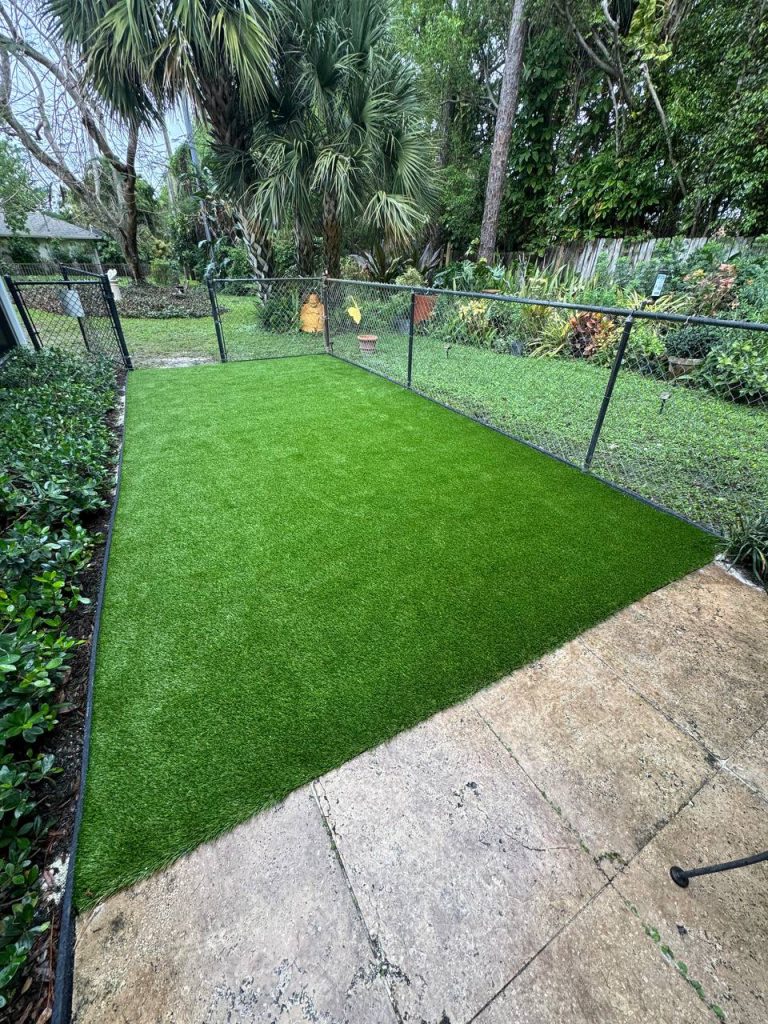
Artificial turf can be a useful surface for a dog area, but its success depends on what happens after your dog uses it. A green appearance does not establish that a space drains well, stays comfortable or cleans easily. The surface, base and care routine need to work together.
Before choosing pet turf for a South Florida home, think about the number of dogs, how often they use the same spot, available shade and your access to water. The most useful question is whether the proposed system fits your dogs and your ability to maintain it, rather than whether artificial grass is universally good for every pet.
Plan around actual pet use
A small toilet area used repeatedly has different demands from a large lawn used mainly for play. Repeated use concentrates waste in a limited space. A low-traffic display lawn should not be used as the maintenance model for a busy dog run.
Tell the installer where your dogs tend to go, whether they dig at edges and which routes they follow along the fence. Include access for cleaning equipment and a way to remove solid waste without walking through the entire yard. Simple planning can make routine care less frustrating.
Drainage needs a complete route
Liquid has to move through the turf system and away through an appropriate site drainage path. The backing is one part of that route. The supporting materials, grade, existing drains and destination of rinse water also matter.
Ask how the planned system will be cleaned and where the water will go. A fast-draining product demonstration does not prove that a particular yard will drain. If water already stands in the proposed dog area, investigate the cause before covering the ground.
Avoid sending cleaning runoff toward doors, a neighbor’s property or places where it will create a separate problem. Where the outlet or drainage design is uncertain, seek a site-specific assessment instead of adding more rinse water and hoping it disappears.
Remove waste promptly
Pick up solid waste promptly and inspect the affected spot. If residue remains, follow the turf and cleaner manufacturers’ directions for removal. The objective is to remove the source of contamination rather than spread it over a larger area.
Keep suitable bags and cleanup tools near the exit you use. For a property with multiple caregivers, agree who checks the lawn and when. An attractive surface can make missed waste less obvious, so a regular visual check still matters.
Build a cleaning routine you can sustain
Start with the product’s written care instructions. Ask what rinsing and cleaning routine is appropriate for your installation, dog use and drainage conditions. Increase attention when concentrated use or lingering odor indicates the routine is not keeping up.
Use only compatible cleaners and follow label instructions, including dilution, contact time and when animals may return. Do not mix cleaning chemicals or assume a stronger concentration works better. Keep dogs away while cleaning and until the product directions permit access.
A hose connection that is difficult to reach often becomes a maintenance problem. Before installation, check whether the hose reaches every corner and whether it can be stored without becoming a trip hazard. Keep the drain path accessible so you can see when debris accumulates.
Odor control has limits
Pet-oriented infill or cleaners may be part of a system, but no single component makes it completely odor-free. Waste pickup, cleaning access, drainage and the intensity of use still affect results.
If an odor returns quickly after correct cleaning, look for a cause rather than repeatedly covering it with fragrance. Note whether it is strongest at an edge, in a low spot or in the most frequently used corner. Share those observations with the installer. Persistent issues may need an assessment beneath the surface, not just another surface treatment.
Consider heat and paw comfort
An outdoor surface that looks inviting may still be uncomfortable in direct sun. Check conditions before letting a dog onto the turf, particularly during hot periods. Shade and cooler times of day can be more useful than relying on a product label to promise comfort.
Do not treat a quick touch check as proof that a surface is safe for every dog or length of exposure. Move activities to a cooler setting when conditions are uncomfortable or uncertain. If you have concerns about your dog’s particular needs, discuss them with your veterinarian rather than relying on a landscaping article for individual animal-care advice.
Inspect edges and favorite routes
Look for lifted edges, loose material and damaged seams as part of routine cleanup. Dogs that scratch, dig or turn sharply in the same place can expose weaknesses that a decorative area would not show.
Keep your dog away from damaged sections until they are assessed. Do not scatter unapproved replacement infill or glue down an edge without knowing the existing system. A small repair should preserve drainage and the intended construction.
Common pet-turf questions
Will rain do all the cleaning?
No. Rain is not a substitute for picking up waste and following a deliberate care routine. Check the lawn after storms and remove debris from drainage paths.
Does pet turf prevent digging?
It should not be treated as a guarantee against digging or chewing. Explain your dog’s behavior during planning and inspect the finished edges regularly.
What should I bring to a consultation?
Bring photos, the number of dogs, their usual use patterns, known puddle locations and information about hose access. These details are more helpful than selecting by appearance alone.
Explore pet turf, drainage and odor control or turf cleaning and repair, then contact Royal Synthetic Turf. A practical plan should connect material selection, installation quality, drainage, everyday use and ongoing maintenance.