Yes. Artificial turf can get hot in Florida sunshine, and a surface that looks green should not be assumed to feel like living grass. Comfort varies with sun exposure, weather, the installed system and how the yard is used. The practical question is how you will manage those conditions in your particular outdoor space.
For South Florida homeowners, heat belongs in the planning conversation alongside appearance, drainage and upkeep. You do not need an exaggerated temperature claim to take it seriously. You need a realistic understanding of exposure and a plan that allows people and pets to use a cooler area when conditions are uncomfortable.
Air temperature does not tell the whole story
The weather forecast describes conditions in the air, not the exact temperature of every surface in your yard. Turf, pavers, decking and other materials can feel very different at the same time of day. A pleasant breeze does not establish that a sunlit surface is comfortable underfoot.
Avoid judging a product only from a sample viewed indoors or in a shaded showroom. Ask how exposure in the actual yard will affect use. A sample can help with texture and appearance, but it does not reproduce the complete installed system or every outdoor condition.
Map the sunny hours you intend to use
Observe the proposed area in the morning, near midday and later in the afternoon. Note where shade falls and whether it reaches the places where children sit, pets rest or adults walk barefoot. Shade patterns also change over time, so one observation is only a starting point.
Match the design to your real routine. If the main use is an early putting session, the priorities differ from a play area occupied during the hottest part of the day. An area that is uncomfortable at your preferred time may need a smaller turf footprint, a different activity location or another surface choice.
Ask specific questions about heat-related product claims
Terms such as cooling, heat-reducing or pet-friendly do not mean that a surface will stay cool in all conditions. Ask for the actual product information, the conditions behind any comparison and the care needed to obtain the described result.
Compare the claim with the proposed installation, not just a marketing image. Different backing, infill and exposure can complicate comparisons. If the description cannot be explained clearly, avoid treating it as a guarantee that people or pets can use the surface at any time.
For independent background, UF/IFAS discusses heat considerations when comparing turf options. Product selection is one decision; planning around direct sunlight remains important.
Shade is a design question, not an afterthought
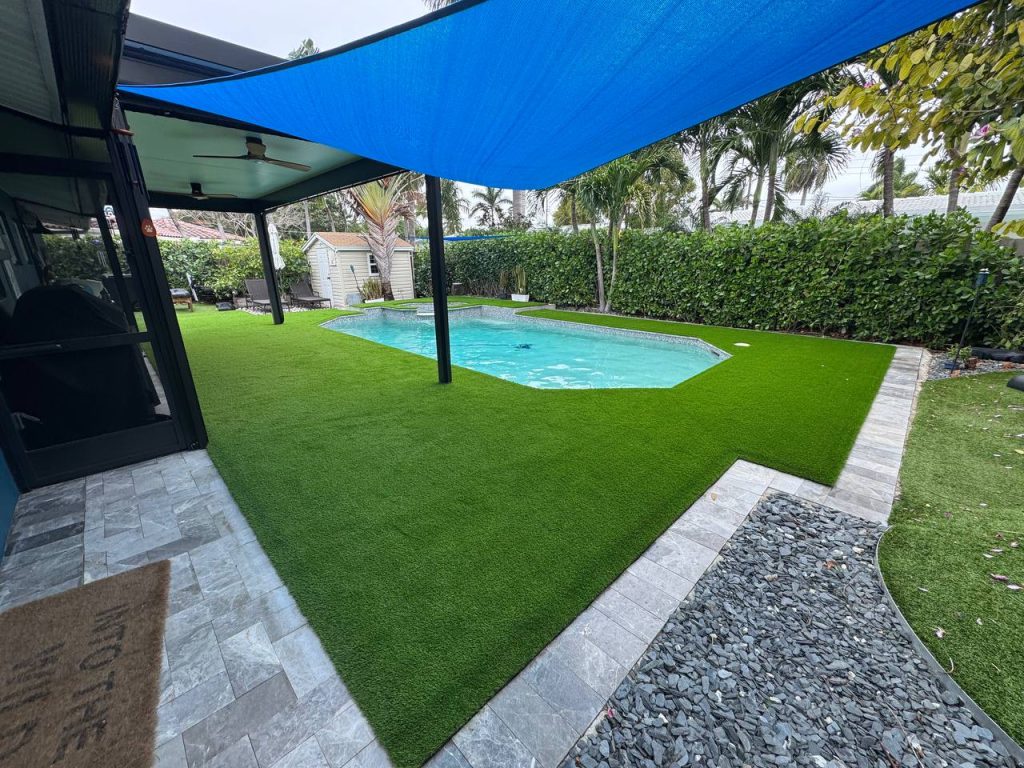
A covered seating area or suitable shade structure may help create a more usable outdoor layout. Review where the shade actually lands rather than assuming a canopy protects the entire lawn. Keep clear routes between shaded rest areas and the house.
Do not attach a shade structure or place heavy supports on an existing turf system without checking how they will be secured. Any structure must be appropriate for its location and conditions. The turf installation and shade plan should be coordinated so neither creates a drainage, access or stability problem.
Understand the limits of rinsing
Water may temporarily change how a hot surface feels, but it does not provide a lasting assurance of comfort. The effect can diminish as conditions change. Constant watering also conflicts with the expectation that an artificial lawn needs no water use.
If you rinse, follow the system’s care guidance and make sure water has a suitable drainage route. Do not create standing water or slippery transitions around adjacent paving. Recheck conditions before use rather than assuming an earlier rinse solved the issue for the afternoon.
Use a practical check before activity
Look at the actual activity area before people or pets enter. A brief touch check is only a limited observation, not a safety certification or a substitute for judgment. If the surface feels uncomfortable or you are unsure, choose a cooler location or postpone the activity.
Keep access to shaded rest areas and drinking water available for outdoor use. This article cannot determine a safe exposure time for a child, adult or animal. Individual needs and conditions differ; seek appropriate professional advice if you have a specific health or pet-care concern.
Watch for unusual concentrated heat
Keep grills, fire features and hot tools away from artificial turf. Also note unusual localized damage near reflective surfaces. If a small patch changes appearance unexpectedly, take photographs of its position and the surrounding materials rather than assuming the entire lawn has worn out.
Ask for an assessment before repairing the visible patch. A replacement piece may be affected again if the source of concentrated heat remains. Preserve product information so the installer can recommend a compatible response.
Heat questions homeowners ask
Is a shaded sample enough to choose a product?
No. Review the planned location, expected use times and written product information as well as appearance and texture.
Can any turf be promised to stay cool?
Do not rely on an all-conditions promise. Ask what a specific claim means and what limitations apply.
Should heat rule out artificial turf everywhere?
It is one important tradeoff. Some layouts may suit your routine, while other highly exposed spaces may be better used differently.
Explore residential turf installation or pet turf planning, then contact Royal Synthetic Turf about your site. Material selection, installation, drainage, use and maintenance all matter; sun exposure should be discussed just as openly.