Artificial turf drainage depends on the complete installation, not just holes or permeability in the visible product. Water must move through or across the system and continue along a suitable route. If that route is missing or obstructed, even an appealing lawn can develop frustrating wet areas.
For South Florida homeowners, the best time to discuss drainage is before installation. A useful proposal should connect existing site conditions with the planned base, grades and any drainage components. It should also explain what the turf installation will address and which wider property issues need separate attention.
Follow the water before choosing a product
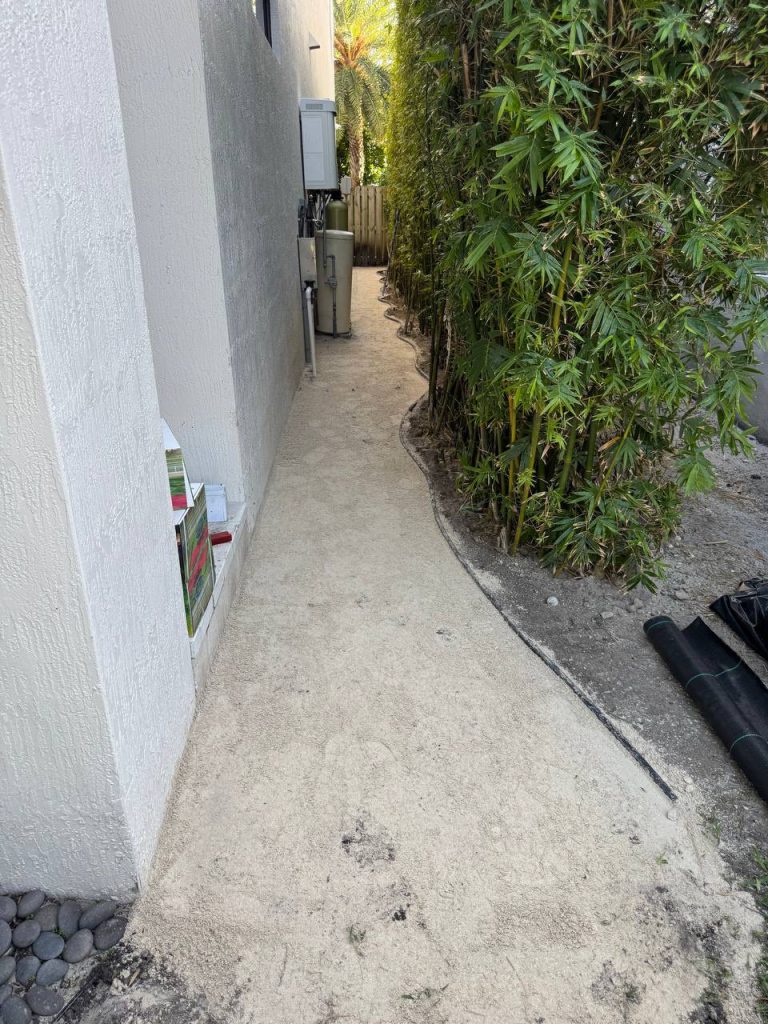
Watch the yard during rain from a safe location. Note where water enters, where it slows down and how it eventually leaves. Photograph the overall pattern, including nearby paving, downspouts, drains and door thresholds.
Record whether a puddle is new or longstanding and whether recent landscaping work changed the route. These observations do not replace a site assessment, but they help an installer ask better questions. A close-up of wet turf alone rarely explains the whole problem.
Separate backing performance from site performance
The turf backing influences how water passes through the product. Beneath it, supporting materials and the underlying ground affect what happens next. Surface grades and available outlets also matter. A specification for one component is not a guarantee for the entire yard.
Ask how the proposed turf, infill where used and base will work together. Be cautious about comparing drainage-rate claims without knowing the test conditions or the construction they assume. A small sample draining into an open container does not represent a compacted site beside a house.
Understand the purpose of the base
A supporting base helps create the shape and stability of the finished surface. Its design must suit the site and intended use. Material choice, preparation and compaction are construction decisions, not details to leave unspecified because the green layer will hide them.
There is no universal depth or aggregate recipe to prescribe from a blog article. Ask what the installer recommends for your conditions and why. If an existing base is being reused, ask how its condition and drainage will be checked before the new surface covers it.
Ask where water will go
A drain is only useful if it has a suitable destination and remains serviceable. Discuss whether the plan relies on existing grades, existing drainage or new components. Clarify who is responsible for investigating an unknown or inaccessible outlet.
Do not direct runoff toward the building or shift a problem onto an adjacent property. Where drainage changes require additional design or approvals, establish those responsibilities before work begins. Your turf contractor should be able to explain the limits of the proposed scope rather than promise to solve every source of water on the property.
Consider the edges and adjoining surfaces
Transitions beside patios, walkways and planting beds can affect water movement. A raised border or added soil may unintentionally interrupt a previously working route. Downspouts may deliver water to a concentrated point that was not obvious in dry weather.
Keep drain covers and maintenance access visible in the design. Ask how loose mulch, leaves and soil will be kept out of drainage openings. A well-planned green area still needs attention when debris from the rest of the landscape collects along its edges.
Do not assume turf solves every puddle
Some wet spots may relate to a blocked accessible opening; others may involve grades, saturated ground or water entering from elsewhere. The appropriate response depends on the cause. Adding a drain or replacing turf without diagnosis can leave the original problem unchanged.
If the site has a history of flooding or water reaching the house, discuss that explicitly and obtain appropriate site-specific advice. Artificial turf is a surface choice, not flood protection. Avoid accepting broad claims that any storm will drain immediately.
Keep drainage working after installation
Remove loose debris and inspect accessible drainage points according to the care plan. After storms, look for changes in where water remains or where debris has accumulated. Do not use sharp tools to probe through the backing or open seams to find an outlet.
If water remains unexpectedly, document the location and conditions and contact the installer. Explain whether it follows every rinse, only occurs after rain or started after another contractor worked nearby. Those details help separate routine maintenance from a construction issue.
Drainage questions worth asking
How quickly should my yard drain?
That needs a site-specific answer. Rain intensity, incoming water, ground conditions and the designed outlet all affect performance. Ask what expectations are appropriate for the actual system rather than demanding a universal time limit.
Is standing water always a turf defect?
No. It may involve a blocked drain, a changed grade or another source of runoff. Have the cause assessed before deciding what to replace.
Can pet areas need different planning?
Yes. Rinsing and concentrated use belong in the discussion, along with how cleaning water will move and how the area will be maintained.
Put drainage into the written scope
Ask for the intended water route, preparation work, existing components to remain and maintenance access to be explained in the proposal. Keep photos of any known wet areas with your project notes. Performance depends on material selection, installation quality, drainage, use and maintenance working together.
For a new lawn, explore residential turf installation. For an existing surface, see turf repair, cleaning and replacement and contact Royal Synthetic Turf with photographs and a description of when the problem occurs.