Artificial turf installation cost in South Florida depends on the yard you have and the system you want to build. Square footage matters, but it is only one part of a useful estimate. Access, removal work, drainage, layout and intended use can change the scope substantially.
A single price copied from another project can create the wrong expectation. Royal Synthetic Turf has not provided a universal price schedule for this article, so the practical answer is a written, site-specific proposal. Here is how to prepare for one and compare it with other quotes without overlooking important work.
Start with the area and its boundaries
Sketch the space and record approximate lengths and widths. Mark planting beds, paving, trees, gates and any area you want to leave untouched. Photos from several corners help explain the shape better than one close-up of the grass.
The amount of material purchased may differ from the finished lawn area. Roll dimensions, curves, obstacles and the direction of the fibers can affect cutting and seams. Ask whether the estimate distinguishes the installed area from material allowance. This makes an irregular side yard easier to compare with a simple rectangular lawn.
Do not buy material from a rough sketch before the installer verifies measurements. A small measuring error can leave a difficult seam or require a different layout.
Understand what has to come out
An existing lawn, old turf, roots, loose fill and buried debris do not all require the same removal work. Disposal and transport also belong in the scope. Ask what the proposal assumes is already in the ground and what happens if unexpected conditions are uncovered.
If old artificial turf is being replaced, its backing and underlying base need assessment. Reusing everything beneath it is not automatically a saving if the reason for replacement is poor drainage or settlement. Conversely, a sound existing base should be evaluated rather than dismissed without inspection.
Ask for the base and drainage scope
The finished green surface is the visible part of a system. Preparation may include excavation, grading, appropriate base materials, compaction and detailing around drains or hardscape. The correct approach depends on the location and intended use; there is no single base recipe to assume for every property.
Ask the contractor to explain where water will go and which existing drainage components remain. A quote that says only “turf installation” leaves too much room for different interpretations. Any drainage changes should have a clear scope and responsibility, especially near the house or a neighboring property.
Match the product to the job
A decorative front strip, a frequently used dog area and a putting green are different projects. Compare the actual specified turf, backing, infill and edging rather than treating all green products as equivalent.
For a pet turf project, ask how the system supports rinsing and maintenance. For putting greens and backyard golf areas, the shaping and playing requirements deserve their own discussion. The lowest material price may not represent the best fit for either use.
Include access, edges and finishing details
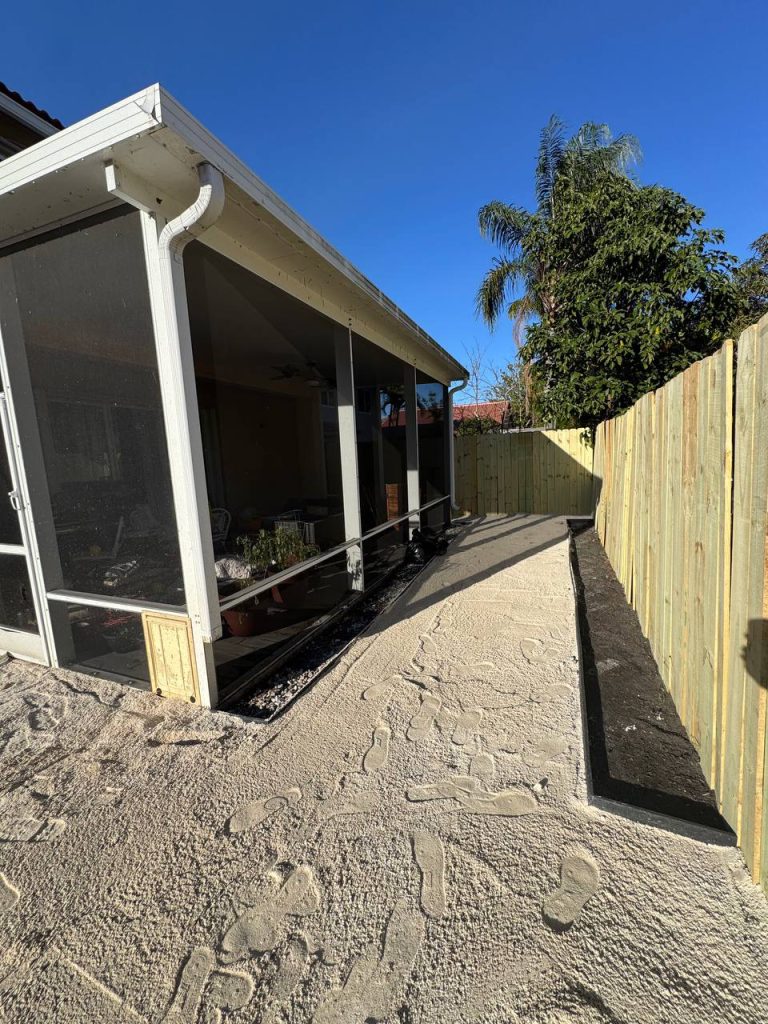
A wide driveway offers different working access from a narrow side gate. Ask how crews and materials will reach the work area and which surrounding finishes need protection. Do not remove fences or landscaping without an agreed plan.
Edges beside paving, tree openings, stepping stones and curved beds take detailing. Clarify how the turf will terminate, how transitions will feel underfoot and who restores disturbed borders. These details can explain why two equally sized projects receive different quotes.
Compare proposals line by line
Before choosing a contractor, check that each proposal identifies:
- Verified area, material selection and any allowance for waste.
- Removal, disposal, preparation and drainage work included.
- Edge treatment, seams, infill and finishing responsibilities.
- Access assumptions and protection of nearby surfaces.
- Cleanup, care instructions and the process for scope changes.
- Any written product or workmanship terms actually offered.
Do not assume that a warranty exists or covers every problem. Request the applicable documents and read exclusions, maintenance requirements and the process for reporting an issue. Keep the proposal and final invoice with the product information.
Budget for ownership as well as installation
Artificial turf does not need mowing, but cleaning and upkeep remain part of ownership. Pet areas may need more frequent attention than lightly used decorative areas. Debris removal, approved brushing and periodic inspections also take time or service costs.
Ask what routine work you can do yourself and what should be assessed professionally. Keep eventual repair, removal and replacement in the long-term comparison. Do not base your decision on a promised savings percentage or guaranteed return that has not been calculated for your household.
Cost questions homeowners often ask
Can you estimate from photographs?
Photos and dimensions can help start the conversation, but they cannot confirm every grade, access condition or buried issue. Treat any early figure as provisional until the scope is verified.
Is the cheapest quote always missing something?
Not necessarily. Compare the written inclusions and assumptions before drawing that conclusion. Ask direct questions about differences rather than comparing totals alone.
Can a smaller project cost more per square foot?
It can, because access, setup and finishing tasks do not decrease in direct proportion to the area. Request the actual project total and scope instead of relying on a unit rate alone.
Request a useful estimate
Gather your sketch, photos, access details and intended uses. Turf performance depends on materials, installation quality, drainage, use and maintenance, so price should be evaluated alongside those factors. Review residential turf installation and contact Royal Synthetic Turf for a site-specific discussion. The goal is a clear proposal you can understand before work begins.