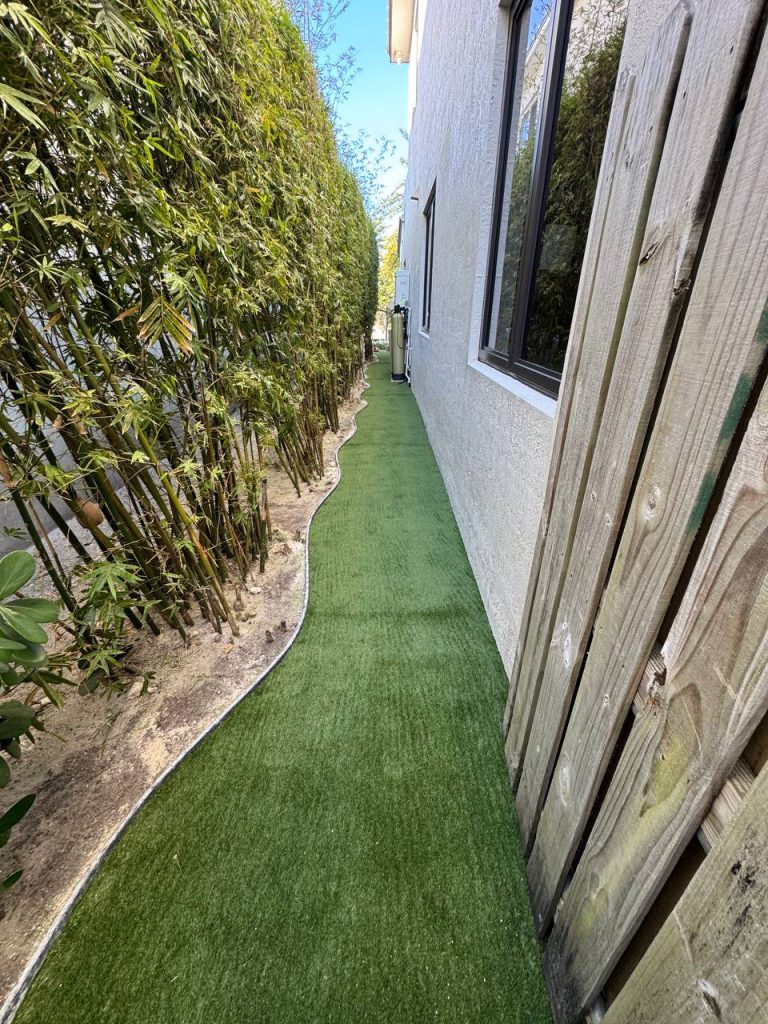
A small backyard or side yard can become more useful when its layout has a clear purpose. Artificial turf may provide a consistent surface for a compact sitting area, a route beside the house or a limited pet space. The right plan starts with what you want to do there, not with covering every remaining inch in green.
Narrow South Florida yards also have constraints that are easy to overlook in a photograph. Gate access, downspouts, air-conditioning equipment, shade and maintenance routes may all compete for space. A compact project deserves careful planning because a small conflict can affect most of the available area.
Give the space one primary job
Decide whether the area is mainly for circulation, sitting, pets or casual recreation. A narrow side passage may function better as a clear route than as a crowded mix of furniture and lawn. A small backyard can often accommodate several activities, but each needs usable space around it.
Draw the positions where people will stand, turn and open doors. Measure those clearances with furniture in place rather than relying on an empty-yard impression. The goal is a surface that supports everyday use, not a layout that only looks spacious from one camera angle.
Keep gates and service access clear
Mark gate swings, hose connections, utility covers and equipment clearances on your sketch. Do not block a service route or alter access requirements to make the turf area appear larger. Ask the appropriate equipment or service professional when a clearance is uncertain.
Think about future work as well as installation day. A garden cart, cleaning hose or technician may need to pass through the area. A narrow decorative edge that catches wheels or creates an awkward step can become a recurring annoyance.
Observe drainage along the building
Side yards often collect water from several directions. Downspouts, paving and neighboring grades can concentrate flow in a confined space. Watch what happens during rain and identify any area that remains wet or directs water toward a door.
Turf should not be used to hide an unresolved water problem. Ask how the surface, backing, base and drainage route will work together. Preserve access to existing drains, and do not raise the finished level against building details without appropriate assessment. A compact site still needs a complete water plan.
Simplify shapes and edges
An elaborate curved lawn may leave unusable slivers between the turf and surrounding beds. A cleaner shape can create a more coherent area and simplify maintenance. Ask the installer to show how the material will be laid out and where seams and transitions are expected.
Stepping stones, planting openings and narrow borders should earn their place in the layout. Consider how they will be cleaned and whether loose soil or mulch will repeatedly spill onto the turf. A small adjustment to a bed edge may reduce ongoing work more than an extra decorative detail adds value.
Study sun and shade at the times you use it
A narrow yard may be shaded for part of the day and strongly exposed at another time. Check the actual use area rather than assuming the building keeps the whole passage cool. Artificial turf can become hot in direct sun.
Shade also affects how you experience the space and where debris collects. A seating position that is comfortable in the morning may be less useful later. Consider whether a different arrangement of seating, planting and surface area would support your routine more effectively than covering the entire space.
Plan pet areas around cleaning access
If the space will be a dog toilet area, tell the installer before choosing the system. Concentrated pet use in a narrow strip makes cleaning and drainage particularly important. Confirm that a hose reaches the whole area and that rinse water has an appropriate route.
Keep waste pickup convenient and avoid placing seating where it conflicts with the main pet-use zone. A pet-oriented product is not a promise of an odor-free space. The materials, supporting construction and routine care must all suit the intensity of use.
Think about installation access and scope
Small projects are not always simple projects. Materials and removed waste may have to pass through a narrow gate or protected outdoor area. Show the contractor the actual route and discuss which surfaces or plantings need protection.
Ask whether the proposal includes removal, preparation, drainage details and restoration of disturbed borders. The project total should reflect the work required, not just the number of square feet. Avoid buying a roll solely because its advertised area appears to match your sketch.
Compact-yard questions
Will artificial turf make the yard look bigger?
A simple, coherent layout may make the space feel more organized, but the usable area depends on clearances and purpose. Avoid a guarantee based on appearance alone.
Can turf go around stepping stones?
Discuss the specific layout, edge treatment and drainage. Many small cutouts can add detailing and maintenance, so compare that option with a simpler arrangement.
Is a balcony the same as a side yard?
No. A raised surface introduces different drainage, load and building considerations. Use the separate rooftop and balcony turf service discussion rather than assuming a ground-level lawn approach applies.
Make the plan useful before making it green
Bring measurements, photographs of gates and drains, and a short description of the activities the area must support. Performance depends on material selection, installation quality, drainage, use and maintenance, even in a very small footprint.
Explore residential lawn turf installation or pet turf planning, then contact Royal Synthetic Turf. A clear plan for access, water and daily use is the best foundation for a compact outdoor space.